







Reading the Ramparts: What Hillfort Defences Actually Tell Us
Archaeology | October 4, 2026
Stand on the rampart of almost any hillfort in Britain or Ireland and the first question comes naturally: who were they defending against? It is the obvious question, but it is not always the most useful one. Over the past century of excavation, archaeologists have learned that the banks and ditches surrounding these sites were doing several jobs at once, and warfare was only one of them.
Take the simplest form: a single bank with an external ditch. This is the classic 'univallate' hillfort, and it appears across Europe from the Late Bronze Age onward. The ditch is usually on the outside, which tells you something practical — the spoil from digging it was thrown inward to raise the bank, giving defenders a height advantage. But the scale is often wildly disproportionate to any realistic military need. Some ramparts would have taken thousands of person-hours to build, and in a society without centralised taxation, that kind of labour was a statement as much as a fortification.
Entrances, Gates, and Deliberate Design
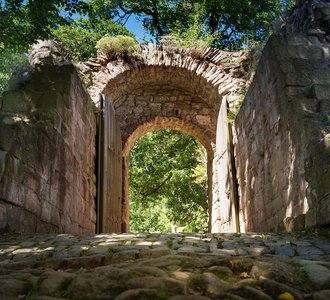
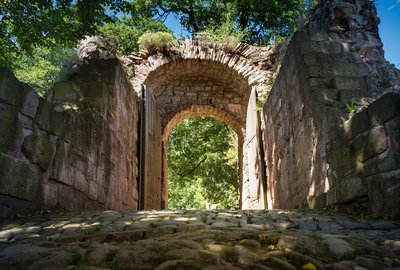
If you want to understand a hillfort, look at its entrances. Gateways are the weakest point of any enclosure, and Iron Age builders treated them with real care. Some are simple gaps in a single line of defence. Others are elaborate: overlapping banks that force anyone approaching to walk sideways along the rampart, exposing their unshielded side. At sites with multiple circuits of defence, the entrances are frequently aligned so that a visitor passes through several gates in succession — a design that slows movement and, perhaps deliberately, makes an impression on anyone arriving.
Excavators have found wear patterns and post holes at these gateways, showing that timber gates and sometimes gate towers once stood there. The timber is long gone, but the stone-packed post holes remain, and they are often the most informative features on the whole site. A gateway that was rebuilt three or four times suggests a community returning to the same spot over generations, repairing rather than abandoning.
What the Defences Were Really For
So were hillforts military? Sometimes, yes. A handful show signs of violent attack — sling stones stockpiled at the ready, burned gates, and in rare cases human remains left unburied in the ditches. But most show no such evidence. Many were occupied for centuries with little sign of conflict, and some of the most heavily defended sites have produced surprisingly little domestic rubbish, hinting that they were used seasonally or for gatherings rather than as permanent villages.
The modern consensus is that hillfort ramparts were multi-purpose. They marked territory. They controlled the movement of people, livestock, and goods. They signalled the wealth and organisation of the community that built them. And yes, when needed, they could be defended. The genius of Iron Age engineering is that a single earthwork could do all of these things at once — and still be legible in the landscape two thousand years later.
Next time you walk a rampart, try reading it that way: not as a fortress, but as a sentence in a language of power, labour, and belonging.


Hillfort Herald

Roundhouses, hearths, querns, and middens — the small finds from hillfort interiors paint a vivid picture of ordinary Iron Age life.