





Storage Pits and the Hidden Economy of Iron Age Britain
Daily Life | September 16, 2026

If you could peel back the topsoil of a typical Iron Age hillfort interior, you would find it pockmarked. Hundreds, sometimes thousands, of pits cut into the bedrock or subsoil, ranging from shallow scoops to deep, carefully lined shafts. These are the most abundant archaeological feature on many sites, and yet they are often overlooked in favour of ramparts and roundhouses. That is a mistake. The pits are the economy.
At Danebury, over 5,000 pits have been recorded. At Maiden Castle, the interior is similarly riddled. These were not rubbish dumps in the modern sense, though they often ended up containing refuse. They were storage facilities — grain silos, essentially — designed to hold seed corn, surplus harvest, and perhaps other perishable goods through the winter and beyond.
How to Store a Harvest Without Pottery or Plastic
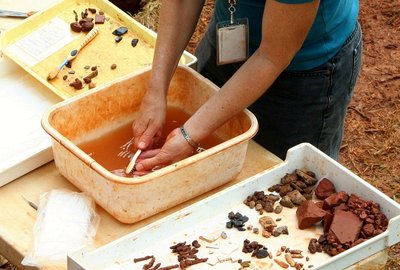
Iron Age storage was a problem of atmosphere. Grain needs to be dry, cool, and protected from pests. A well-dug pit, sealed with clay or dung and topped with a cover, can actually achieve this. The first grain stored in a freshly dug pit may spoil, but once the pit has been used and its walls have developed a particular microbial environment, it becomes a surprisingly effective container. Experimental archaeology has shown that grain can survive in such pits for months, sometimes longer.
The pits were not all in use at once. They were dug, used, emptied, and refilled with rubbish or backfill. This cycle created the layered deposits that archaeologists love: pottery, animal bone, charred plant remains, and occasionally human bodies, all jumbled together in a sequence that can be radiocarbon dated.
Some pits contain complete or partial human skeletons, often placed in unusual positions. Whether these individuals were sacrificed, executed, or simply buried with unusual haste is debated. What is clear is that the pit was not a neutral space. It was a threshold between the living world above and something else below.
The scale of storage implied by these pits is significant. A community that could store grain in bulk was a community that could survive a bad year, feed specialists, and perhaps trade surplus. Storage is power. It creates obligation, debt, and hierarchy. The pit is where the Iron Age economy literally took root.
The Social Life of a Hole in the Ground
Pits were also places of deposition. Items placed in them — quern stones, weaving combs, animal skulls, human remains — were not simply discarded. They were chosen. Some archaeologists interpret these deposits as offerings, marking the end of a pit's useful life or the beginning of a new one. The boundary between storage and ritual is blurry here, and that blurriness is itself informative.
When you next see a hillfort interior, look for the dimples and hollows. They are the fingerprints of an agricultural system that fed communities, sustained hierarchies, and left its mark on the land in the most literal way possible.


-

-
Bones, Seeds, and Slag: How Archaeologists Reconstruct Hillfort Life
Sep 1, 2026Settlement Patterns

-


Hillfort Herald

Forget swords and chariots — the most common weapons found at hillforts are slingstones, and they tell a story of communal, low-cost warfare.